














It’s common in some cartoons for the main character to wake up to a screeching rooster if they live on a farm. This isn’t entirely inaccurate though since this is how some people actually start their day.
“When we wake up in the morning, we don’t have alarm clocks, we have chickens” she said.
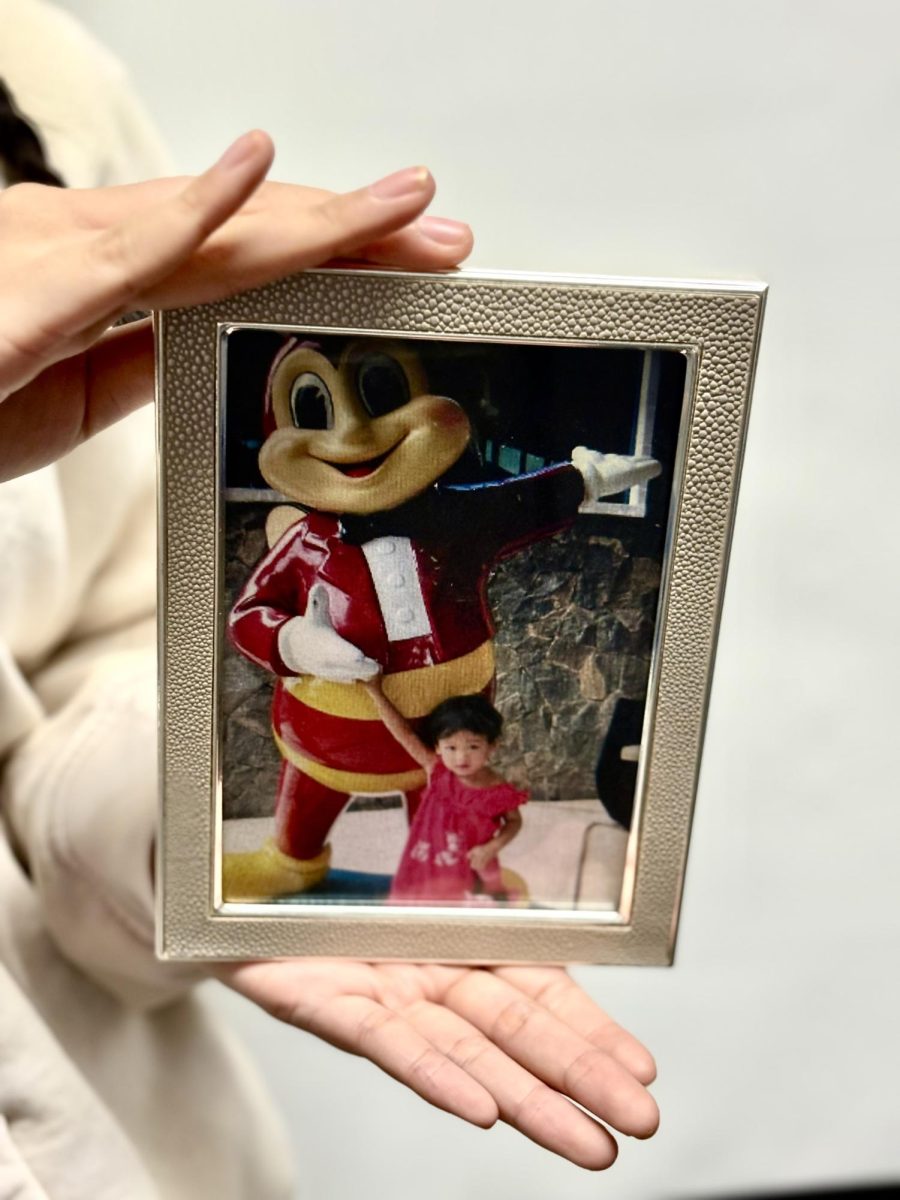
Shanda Rose Ortega grew up spending time outdoors, socializing, and learning to be independent in her native country. Now in America, she reflects on the way the customs, experiences, and daily life are different and how they affect her.
When living in the Philippines, clothing, tradition and landmarks are common sights. “When you get married, a guy wears [a Baro’t Saya]” she said. “We wear that during Filipiniana days.” She lived around places like Intramuros, the Cebu–Cordova Link Expressway, Magellan’s Cross, Plaza Independencia, Fort San Pedro, and more. Living there also includes knowing about the history of some of these places.
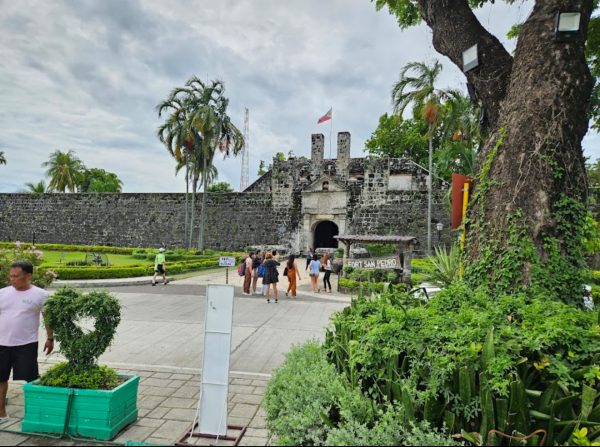
“In our country where we were conquered by Spanish people, Spaniards, [Ferdinand Magellan] died in the Philippines and he was buried in the Magellan’s Cross. We [also] have a plaza where historic people were buried.”
Ortega also shared some common trends being the same in the Philippines and the US.
“They wear baggy pants, they wear hoodies, they wear jorts with crop tops… It’s completely the same” she said. “I think we do have Stanley’s, but we don’t have Owala, we have Aqua Flask.”
She spent lots of time outside in a farm-like area and lived a very simple life. There, her family would wash clothes with brushes and buckets and hang them outside to dry.

Ortega also often assisted with others in need while spending her time there. “I helped the elder people in the streets [who] don’t have families,” she said. “There’s some kids [too], they don’t have family [either]. They just ask for food and that’s enough.”
Her experience with friendships and other relationships was also different for her when in the Philippines and the US.
“I do have friends here (US), but in the Philippines, I don’t have friends like that. They use people to get what they want. Sometimes childhood friends just have different interests. I mean, you just kind of move on.”
Ortega attended a private school in Intramuros where things seemingly work differently than in schools in the US. One school event she was eager to share about was the showcase of fun and unique booths.
“For example, like jail booths,” she said. “you get captured, and then you get with your crush. There’s a marriage [booth too], like for example, that connects with the jail booth. They capture you, and then you go to the jail, and then you have to get married to get out.”
There are horror booths and other ones with different games and activities. She mentioned how from activities like these in school, “you make friends.”
“Like elementary school, you just have one class and one teacher the whole time” she said. “They have their own traditions [too], for example, some places in the Philippines, like the Cebu where I’m from, every year they have a Sinulog. Every school gets to participate [in] them and practice the street dances with their costumes, and it lasts [till] midnight or [after] midnight.”
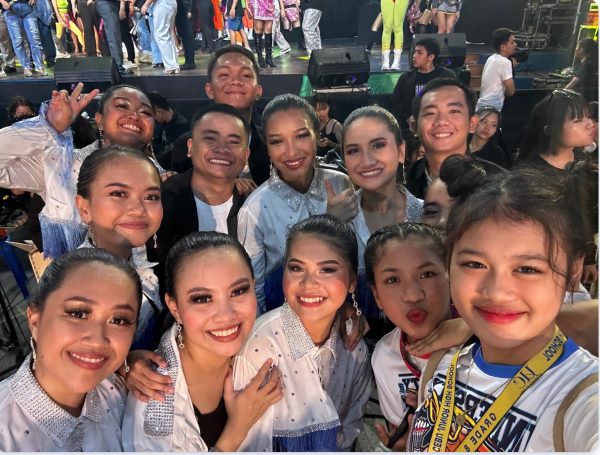
As Ortega mentioned, the Sinulog is an annual festival in the Philippines that celebrates Jesus. There are parades, dances, food, and much more that she attended to every year.
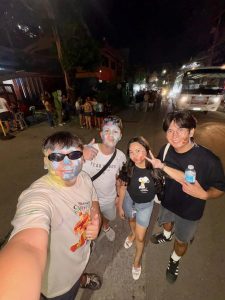
“[It] has many street foods like fishballs,” she said. “In the night, it’s different, because people gather out and then buy sweet food. Then, so many people [throw] paint in your face.”
Many holidays in the Philippines are the same ones celebrated in America, but much larger and more important. Their celebrations of Christmas and Easter require much more preparation, value, and amounts of activities.
“In the Philippines, [Christmas is] different because we have a countdown until 12, and then we jump because it’s our tradition. We celebrate [Easter], but we don’t eat lots of rice, and we don’t go to shower in the afternoon.”
Being in a place where socializing came easy had not prepared Ortega for life in the United States.
“It was hard for me when I first got here,” she said. “I [once] saw my friend and then I didn’t know that was her sister, not her.” She explained how she was excited and went up to pinch her cheeks. “I was just like, hey, you’re so cute! I didn’t know we’re not supposed to do that.”
Ortega had spent some time in the US when she was 7 before moving back to the Philippines and eventually returning just recently. During that time, she had made many mistakes in getting around and understanding differences in socializing.
“I didn’t know any English, I didn’t know everything, I was completely lost,” she said.
At Lantern Road, she often didn’t know how to do things and didn’t understand how to ask for help. “I cried,” she said, “and one time the teacher told me ‘okay, if you behave today, you get a sticker!’”

Thanks to every struggle she came across, Ortega was able to understand how to interact better.
“The easiest was meeting [people],” she said. “I did get bullied when I was in 1st grade, 2nd grade, and 3rd. But we’re okay now because I talk to her mom [who] is so nice.”
She also had it easy with not having to be too independent when getting around unlike in the Philippines.
“My mom provides everything for me here, like for my school lunch,” she said. “But in the Philippines, it’s different because you need to have your own money that is in your wallet.”
She had benefited well from two different countries to experience her childhood and the amount of cultural immersion that she was able to engage in.
“The best thing [in] childhood that I wish I could go back to [is],” she said, “think[ing] what your mom is thinking, right? If you think that you have a problem, when you grow up, you understand clearly. But when you were a kid, you just cry because your mom didn’t give you candy or something.”
During her life in the Philippines, Ortega attended an amazing school, participated in every Sinulog, and lived in a place where “everyone knows everyone.”
“Life will be better if you’re surrounded by good people,” she said.